
Ruck Running 102
Getting started
OK, so you’ve decided that ruck running is right for you.
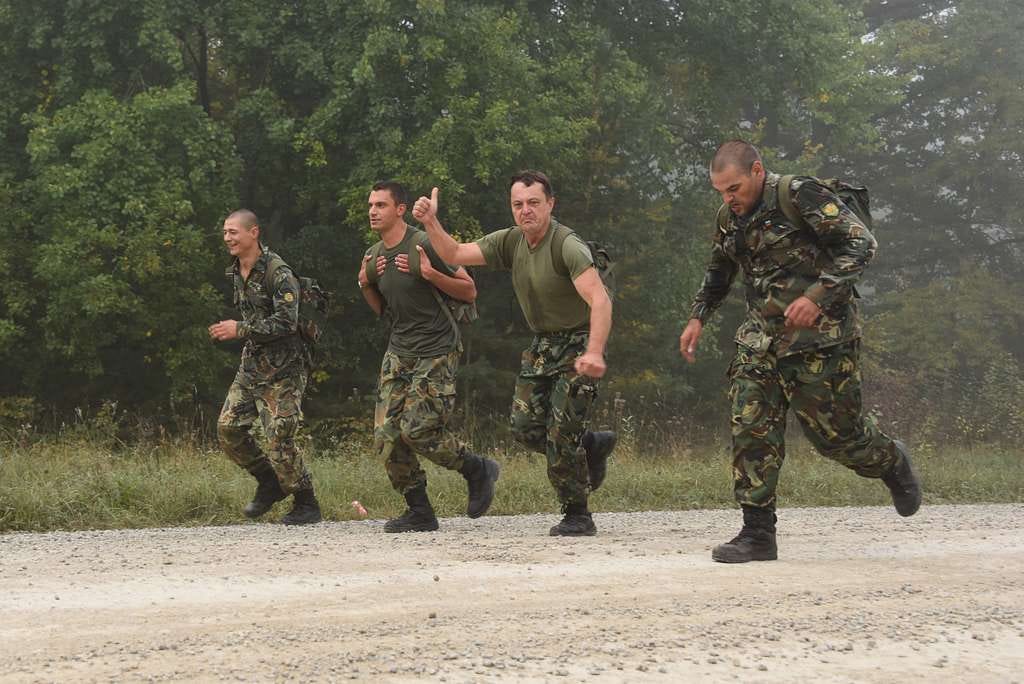
To reiterate last week’s post for all the sad clowns who emailed to tell me that ruck running is bad for your knees, I never said that ruck running is good for you.
Nor am I advising that you do it, but if you need to do it, or want to do it, you should at least go about training for it properly.
If you are preparing for a military selection and you don’t prepare, good luck. If you fail to prepare, prepare to fail.
Normally we don’t even call it a ruck run. That would bring the sad clowns out of hiding. Instead, we call it a movement under load. This means you can choose to move as fast or as slow as you like. But, if you don’t move fast enough, you don’t stick around very long.
One of the first lessons you learn is that it pays to be a winner.
So how do you prepare to be a winner?
Step one is to begin to increase your running without a ruck.
If you expect to have to complete a 12 miler, I recommend being very comfortable running 15 miles. If your event is less, you can get away with less, but always exceed your event distance in training-- at least up to around 20 miles. For events over 20 miles many people choose to limit long runs to around 18 miles, (Marathon training plans seldom have runs longer than this).
My thought however, is that I want to have as few unknown variables as possible. Before my first 50-mile race, I ran 50 miles. Sure, it still sucked, but I knew I could do it.
One of the biggest mistakes I see people make is not training, and just expecting to be able to move for a distance farther than they have moved before with more weight than they are comfortable carrying.
Hey, maybe that will work out for you.
Step two (which can be completed simultaneously with Step one) is increases you rucking distance/weight.
I recommend 1 long run and 1 long ruck per week. Conventional wisdom says to increase your mileage no more than 10 % per week. Personally, if you are feeling good sleeping, eating, and recovering like you should I think you can add 2 miles per week, to your ruck or run, and alternate those adding to one or the other each week.
A good technique is to do the long run Saturday, the long ruck on Sunday, and use Monday as a recovery day. You can adjust the load based on how you are feeling, but you are still rucking on tired legs which is less likely to cause damage than running on tired legs.
For the first several months I would limit ruck running to one time per month. Do it on a Saturday and go half the distance of your longest run, then recover Sunday.
For weight, I would start lighter than you think you need to. Most military events will require around 45 lbs of dry weight (excluding food or water). You can make a lot of money with 20-25 lbs. Only move up when you are comfortable at your distance.
I would rather be comfortable at 15 miles with 25 lbs knowing that I needed to ruck with 45, than be comfortable with 45 lbs but only for 8 miles.
A great training technique is to do ‘weight-drop rucks’ where you carry your weight in 5-10 lb increments and drop weight when maintaining your pace becomes difficult.
It is also critical when running with a ruck to pay strict attention to your form, ensuring that your feet are landing under rather than in front of your hips.
Finally, just because you are ruck running doesn’t mean that you have to run the whole time. Next week I’ll talk about pacing strategy, but it’s perfectly acceptable to do some walking.
If you don’t follow my other substack, Think. Read. Write. Repeat. and you are increasing your ruck training, you may want to at least check out my monthly roll-up post on the three little things that change everything.
R.T.F.U. is a reader-supported publication. To receive new posts and support my work, consider becoming a free or paid subscriber.

Paid subscribers receive my Sunday morning ruck rant videos on Sunday. You can check them out on my YouTube channel.
Just giving you the heads up we may have some cool Ruck The Fuck Up t-shirts and sweatshirts coming soon. I’ll keep you posted.
Good Deals
My pals at SOFLETE provide world-class training, supplements, and gear. I love their training app. You can get 20% off with the code: Walkingpoint20
Salty Britches coupon code: RTFU20 will get you 20% off an already ridiculously underpriced insurance policy against chafing and blisters.
I now have a new favorite all-purpose belt from Marine Raider-owned company, BoldBannds. Bold Bannds are not only stretch/roll proof, anti-microbial, waterproof, crackproof, bombproof, and maintenance free. The owner, Chris Bannister, will work with you to create your personalized belt. Use the coupon code RTFU to get 10% off.
If you make awesome gear and are interested in offering readers a deal, please hit me up at john@walkingpoint.org
Thanks for reading, I’ll see you next week.
Walk before you are tired. Drink before you are thirsty. Eat before you are hungry. Move as fast as you are able given the terrain, and distance remaining. The Ultrarunner's truths.
Same…